The race for electric vehicle (EV) dominance in Europe isn’t just about selling cars; it’s about controlling the very heart of the EV: the battery. As of 2026, the continent is rapidly building its “battery sovereignty,” driven by an unprecedented wave of gigafactory investments. While Asian giants initially led the charge, a new ecosystem of local and international players is now firmly established on European soil. For automotive professionals, understanding these key players is critical to navigating the evolving supply chain.
Here’s a breakdown of the top 5 battery manufacturers shaping Europe’s electric future:
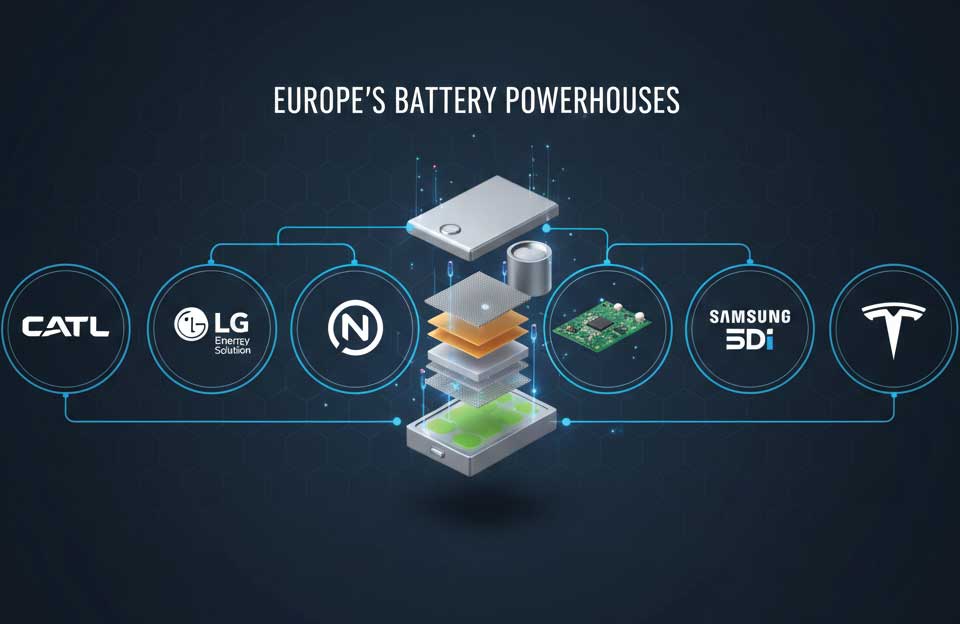
1. CATL (Contemporary Amperex Technology Co. Limited)
Origin: China
European Footprint: Germany (Erfurt), Hungary (Debrecen – under construction/expansion)
Key Partners: BMW, Mercedes-Benz, Volkswagen Group, Stellantis
Impact: CATL remains the undisputed global leader in EV battery production, and its European operations are strategically vital. The Erfurt plant in Germany is fully operational, supplying cells to major European OEMs, while the massive Debrecen plant in Hungary is set to become one of the largest battery factories in Europe. CATL’s strength lies in its diverse cell chemistries, including LFP (Lithium-Iron-Phosphate) and NMC (Nickel-Manganese-Cobalt), and its ability to rapidly scale production to meet high demand. Its presence underscores the ongoing reliance on established Asian technology, even as Europe builds its own capacity.
2. LG Energy Solution
Origin: South Korea
European Footprint: Poland (Wrocław)
Key Partners: Volkswagen Group, Ford, Stellantis, Renault
Impact: LG Energy Solution was one of the earliest and most aggressive foreign investors in European battery production, with its Wrocław plant in Poland being a cornerstone of the continent’s early EV transition. This facility has been instrumental in supplying high-performance NMC cells for a wide range of popular European EVs. LGES benefits from deep, long-standing relationships with major European carmakers, providing a stable and proven supply of advanced battery technology. Its expansion plans continue to focus on increasing capacity and diversifying its cell formats.
3. Northvolt
Origin: Sweden
European Footprint: Sweden (Skellefteå – “Northvolt Ett”), Germany (Heide – “Northvolt Drei” – under construction)
Key Partners: Volkswagen Group, Volvo Cars, Polestar, Scania, BMW
Impact: As Europe’s most prominent homegrown battery champion, Northvolt represents the continent’s ambition for true “battery sovereignty.” Its gigafactory “Northvolt Ett” in Sweden is already producing high-quality NMC cells with a significantly lower carbon footprint, leveraging clean hydropower. The upcoming “Northvolt Drei” in Germany is designed to become another massive production hub, strategically located near major automotive OEMs. Northvolt’s appeal lies not only in its European origins but also in its focus on sustainable production, advanced recycling capabilities, and bespoke cell development for its partners.
4. Samsung SDI
Origin: South Korea
European Footprint: Hungary (Göd)
Key Partners: BMW, Audi, Porsche, Stellantis
Impact: Samsung SDI positions itself as a supplier of premium, high-performance battery cells, primarily focusing on nickel-rich NMC chemistries for luxury and performance EVs. Its Göd plant in Hungary is a critical production base, serving several high-end European brands that demand cutting-edge technology for long-range and fast-charging capabilities. Samsung SDI’s strategy emphasizes innovation in cell design, including prismatic and cylindrical formats, to meet the specific requirements of its premium automotive clients.
5. Tesla (Gigafactory Berlin-Brandenburg)
Origin: USA
European Footprint: Germany (Grünheide – “Giga Berlin”)
Key Partners: Internal (Tesla Model Y, Model 3)
Impact: While primarily an OEM, Tesla’s Giga Berlin is a major battery producer within Europe, albeit primarily for its own vehicle production. The facility currently assembles battery packs and has ambitious plans to integrate 4680 cell production. Tesla’s unique approach to vertical integration means it directly influences battery technology development and manufacturing within Europe, pushing boundaries in cell design, cost reduction, and energy density for its own fleet. Its presence challenges traditional supplier-OEM relationships and forces competitors to innovate faster.
The Future Outlook: The European battery manufacturing landscape is dynamic and competitive. While Asian players continue to dominate in terms of sheer volume and established technology, European-led initiatives like Northvolt are rapidly gaining ground, emphasizing sustainability and localized supply chains. The coming years will see continued investment, technological diversification (including solid-state battery pilot lines), and an increasing focus on closed-loop recycling to secure Europe’s position as a global EV powerhouse.