In the world of modern engineering, few things are as widely discussed—and as frequently misunderstood—as “self-driving” cars. While we often group all autonomous technology into one bucket, the industry relies on a precise hierarchy defined by SAE International (the Society of Automotive Engineers). This 0-to-5 scale is more than just technical jargon; it determines who—or what—is legally responsible for the safety of everyone on the road.
As we move through 2026, understanding these levels is essential for anyone tracking the transition from traditional driving to a software-defined future.
The Hierarchy of Autonomy
The levels are broadly split into two groups: Driver Support Features (Levels 0–2) and Automated Driving Features (Levels 3–5).
Level 0: No Automation
At this level, the human does 100% of the driving. The car may have safety “warnings” like blind-spot alerts or lane-departure vibrations, but it cannot steer or brake on its own.
- Status: Most cars on the road today.
Level 1: Driver Assistance
This is the lowest level of actual automation. The vehicle can assist with either steering or speed, but never both at the same time.
- Examples: Classic Adaptive Cruise Control (ACC).
- Advantage: Reduces driver fatigue on long highway stretches.
Level 2: Partial Automation
This is currently the industry standard for new premium vehicles. The car handles steering and speed simultaneously (e.g., lane centering plus adaptive cruise). However, the human must remain fully engaged and supervise the system at all times.
- Examples: Tesla Autopilot (Supervised), Ford BlueCruise, GM Super Cruise.
- Constraint: If the driver looks away, the system will eventually disengage.
Level 3: Conditional Automation
The “Big Leap.” At Level 3, the vehicle can truly drive itself under specific conditions (e.g., slow-moving traffic on approved highways). The driver can legally take their eyes off the road but must be ready to take over within a few seconds if the car requests it.
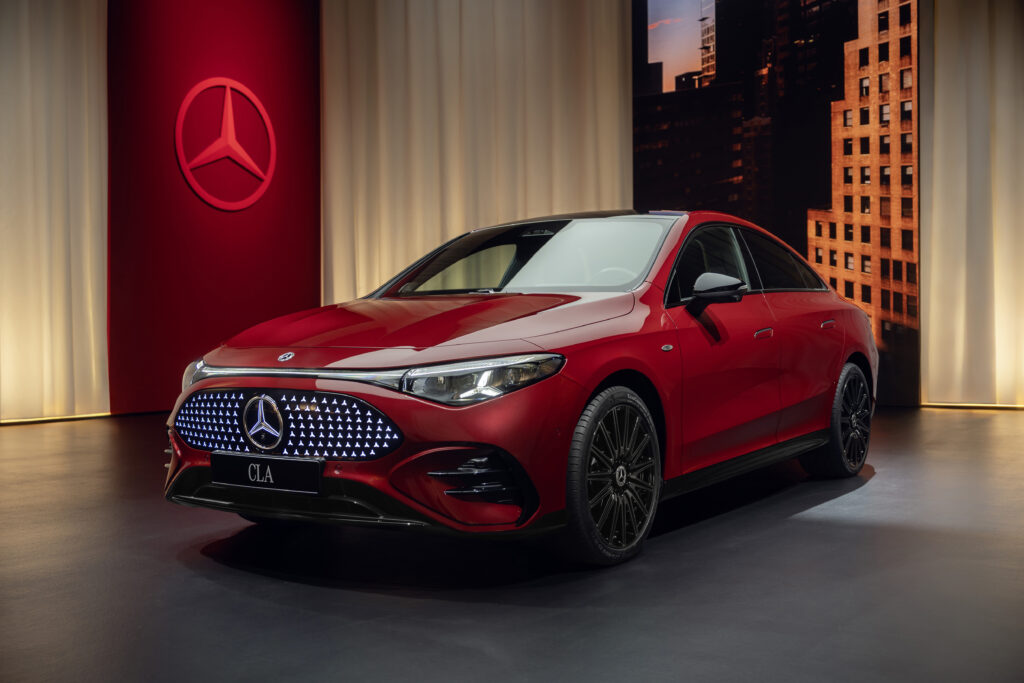
- Status: Extremely rare. Mercedes-Benz’s Drive Pilot is one of the few systems currently approved for this in selective markets.
- The Gray Area: Liability begins to shift toward the manufacturer during the automated session.
Level 4: High Automation
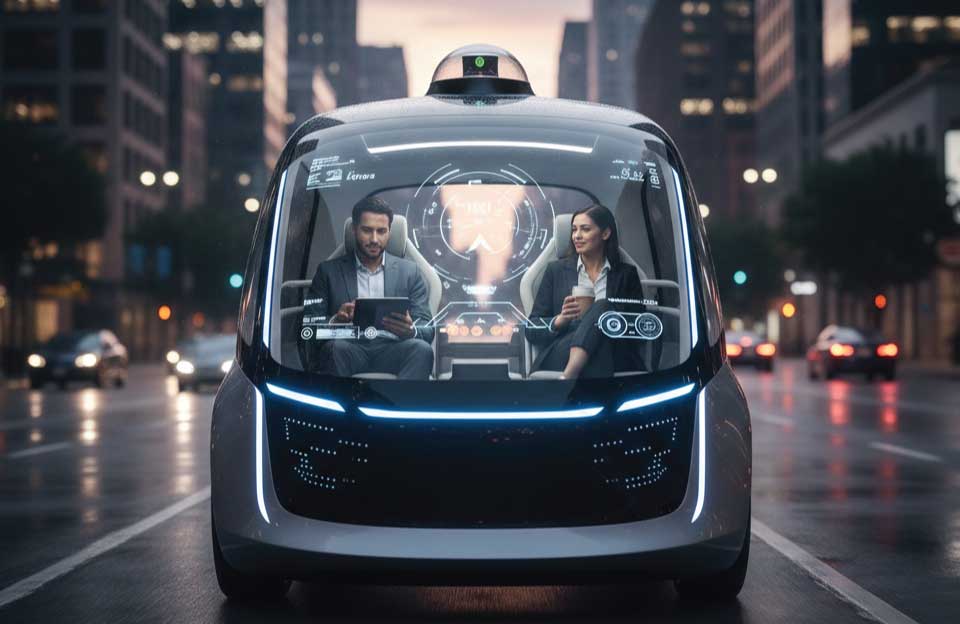
This level does not require the human to be alert or ready to take over. The car is designed to handle the entire trip. However, it is geofenced, meaning it can only operate in specific areas or under certain weather conditions.
- Examples: Waymo or Zoox robotaxis operating in cities like San Francisco or Austin.
- Advantage: No steering wheel or pedals are strictly necessary within its “operating domain.”
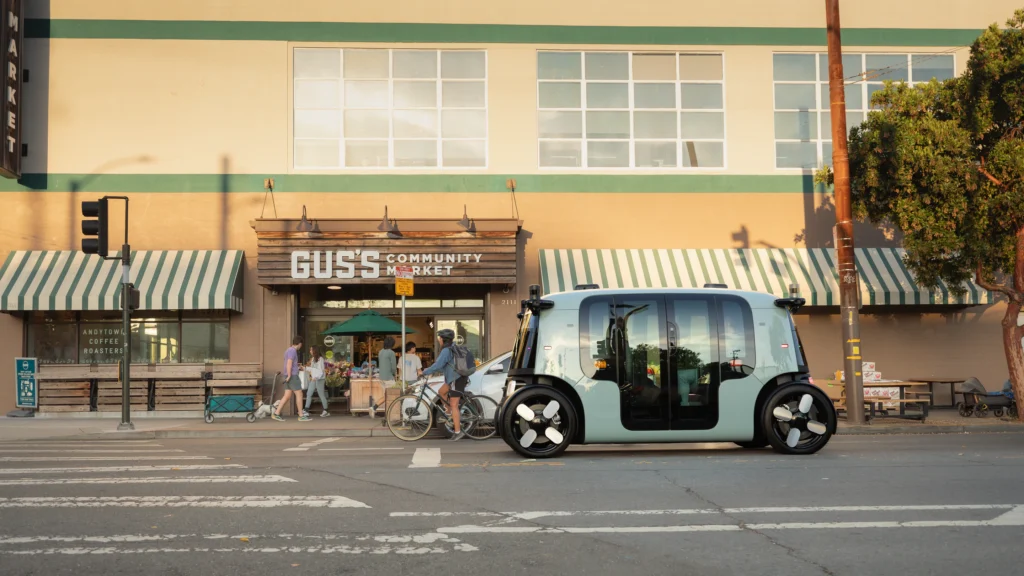
Source: https://zoox.com/journal/zoox-robotaxi-in-san-francisco/
Level 5: Full Automation
The ultimate goal. A Level 5 vehicle can drive anywhere, at any time, in any weather condition that a human can handle. There is no geofencing and no need for human controls.
- Status: Currently theoretical/experimental. We are several years (or decades) away from wide-scale consumer availability.
The “Liability Gap”: Why the Jump to Level 3 is Hard
For us engineers, the most fascinating part of this scale is the transition between Level 2 and Level 3. In Level 2, you are the pilot; in Level 3, the software is the pilot. This shift changes everything for insurance companies and legal frameworks. Most manufacturers prefer to stay at “Level 2+” because it keeps the legal responsibility on the driver while still offering advanced features.
Autonomy Levels at a Glance
| Level | Name | Human Role | Who is Steering/Braking? |
| 0 | No Automation | You do everything | Human |
| 1 | Driver Assist | You must be hands-on | Human + System |
| 2 | Partial Automation | You must be eyes-on | System |
| 3 | Conditional Autonomy | You must be available | System |
| 4 | High Autonomy | You are a passenger | System |
| 5 | Full Autonomy | You are a passenger | System (Anywhere) |