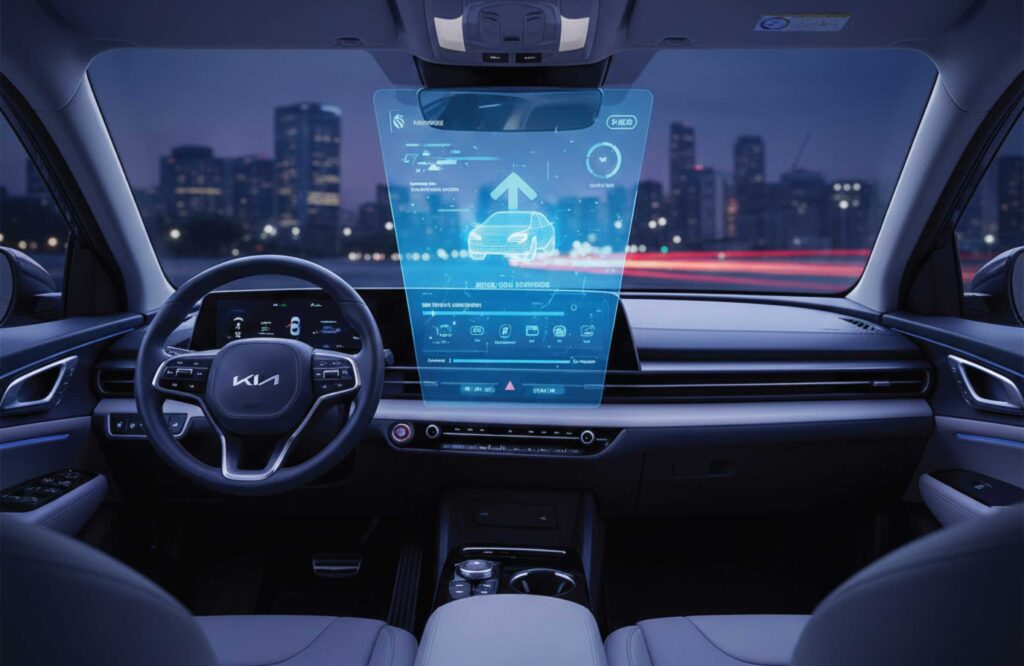
In the traditional automotive world, a car’s features were largely frozen the moment it rolled off the assembly line. However, the industry is shifting toward Software-Defined Vehicles (SDVs), where the driving experience is constantly refined through code. Kia is now leaning heavily into this trend with the expansion of the Kia Connect Store and a new subscription model for Over-the-Air (OTA) updates.
This move signals a broader industry shift: car manufacturers are no longer just hardware providers; they are becoming digital service platforms.
The Kia Connect Store: Personalization After Purchase
First introduced with the flagship EV9, the Kia Connect Store is now scaling up to serve over one million customers across Europe. The concept is simple: owners can use an app to “unlock” features or services long after they’ve purchased the vehicle.
Current offerings include:
- Remote Smart Park Assist 2.0: Allowing the car to park itself while the driver is outside.
- Entertainment & Streaming: Enhanced music and data services.
- Future-Proofing: Upcoming updates are expected to cover everything from performance enhancements to advanced driver assistance systems (ADAS) and navigation.
The New Subscription Model for OTA Updates
One of the most significant announcements from the recent press release is the introduction of a dedicated subscription for OTA updates. While the first year (including two free updates) is bundled with the vehicle, Kia is introducing a £80 annual subscription to maintain this wireless convenience.
For this fee, users receive two major update packages per year. These aren’t just for navigation maps; they include:
- Feature Enhancements: New software logic to improve safety and convenience.
- Bug Fixes: Resolving software issues wirelessly without a trip to the dealership.
- Intelligent Routing: Features like the EV Route Planner, which automatically suggest charging stops based on battery levels.
The Engineering Perspective: Why This Matters
From an engineering and manufacturing standpoint, the “Ever-New” vehicle concept is a game-changer. Telematics-equipped models from 2022 onwards are built with the architecture required to support these wireless handshakes.
By shifting to an OTA-first model, Kia can maintain vehicle value and “newness” over a longer lifespan. For the owner, it means the car they drive in year three could actually be more capable than the car they drove off the lot on day one.
Comparison: Tesla vs. The Traditionalists
As we’ve seen in previous deep dives, Tesla pioneered the OTA model, often providing performance boosts and safety patches for free. Kia’s approach represents the “middle ground” becoming common among legacy OEMs: providing the technical capability for updates but utilizing a subscription-based revenue model to fund the ongoing software development. Whether consumers will embrace the “feature-as-a-service” model long-term remains one of the most debated topics in the industry today.